Skin conditions and allergies
Management of childhood eczema, hives, allergic rashes, and skin conditions
Overview
Children's skin is delicate, thin, and prone to inflammatory conditions, allergies, and infections. Skin Conditions and Allergy Care at The Ved Clinic provides specialized diagnostic and medical care for pediatric skin disorders. Gold-Medalist Pediatrician Dr. Amodini Walia helps families manage childhood eczema, allergic hives, diaper rashes, cradle cap, and skin infections.
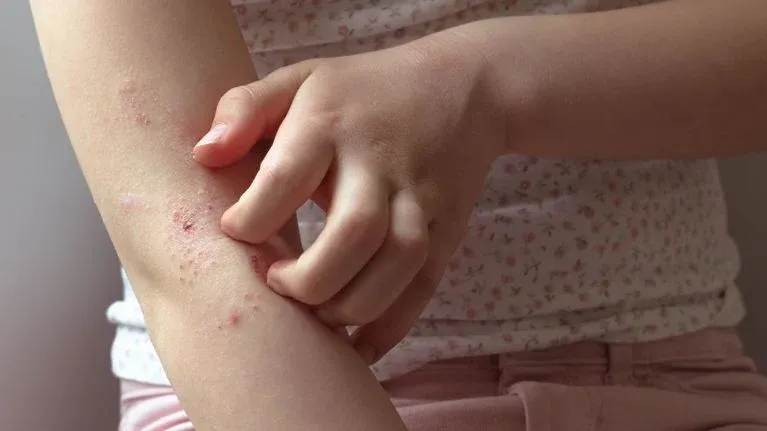
Atopic dermatitis, commonly known as childhood eczema, is a chronic inflammatory skin condition characterized by dry, red, and extremely itchy patches. It often begins in infancy and is associated with environmental or food allergies. Dr. Walia focuses on restoring the skin's natural moisture barrier, prescribing child-safe topical anti-inflammatory treatments and advising parents on daily skincare routines to prevent eczema flares.
We also treat acute allergic hives (urticaria), which present as sudden, raised, itchy red welts on the skin. Hives can be triggered by viral infections, insect bites, medications, or food allergies. Dr. Walia performs detailed allergy evaluations to identify trigger factors, prescribing appropriate antihistamines to reduce itching and swelling quickly.
Our skin care services also cover diaper dermatitis, cradle cap, and common childhood infections like impetigo or ringworm. By combining targeted topical treatments with education on skin hygiene, we help protect your child's skin, keeping it healthy and comfortable.
Common Symptoms & Indications
- ✕ Dry, red, extremely itchy patches on the face or joints
- ✕ Sudden raised, itchy red welts (hives) on the skin
- ✕ Severe diaper area redness, swelling, or skin peeling
- ✕ Pus-filled blisters, yellow crusts, or scaling skin patches
Clinical Procedure & Diagnostics
The consultation begins with a **visual skin audit**, where Dr. Amodini Walia examines the rash pattern, color, dryness, and distribution across the body (face, joint creases, diaper area).
Dr. Walia reviews the child's allergy history, soap/detergent exposures, and diet to identify potential triggers. If she suspects an atypical infection, she may take skin scrapings or swap cultures for laboratory analysis.
She then prescribes customized skin treatments (pediatric barrier creams, moisturizing emollients, topical steroid ointments, or antibiotics). Dr. Walia provides a detailed guide on daily bathing and skin hydration, scheduling follow-up checks to monitor healing.
Key Recovery Benefits
- ✓ Fast relief from skin itching, pain, and discomfort
- ✓ Restoration of the skin\'s natural moisture barrier
- ✓ Identification of underlying environmental or food triggers
- ✓ Prevention of secondary bacterial skin infections from scratching
Rehabilitation & Recovery Timeline
Visual Assessment
Examining skin lesions, mapping rash distribution, and identifying potential allergen triggers.
Skin Treatment
Prescribing pediatric-safe barrier creams, intensive moisturizers, or topical ointments.
Maintenance Check
Establishing a daily skincare routine and monitoring the skin\'s healing progress.
Frequently Asked Questions
Many children with eczema show significant improvement by age 5-6, and many outgrow the condition completely by adolescence, though some may continue to have sensitive skin.
Bathing daily is recommended. Use lukewarm water, keep baths short (5-10 minutes), use soap-free cleansers, and apply moisturizer within 3 minutes of patting dry.
Hives are most commonly triggered by viral infections, followed by food allergens (nuts, eggs), medications, insect bites, or sudden temperature changes.
Change diapers frequently, clean the area gently with water (avoid alcohol wipes), apply a thick layer of zinc-oxide barrier cream, and leave the diaper off for periods to keep the skin dry.
Consult Specialist
Schedule a detailed clinical assessment with Dr. Amodini Walia at The Ved Clinic Dehradun.
Request Appointment